Build Opportunities That Belong to You.
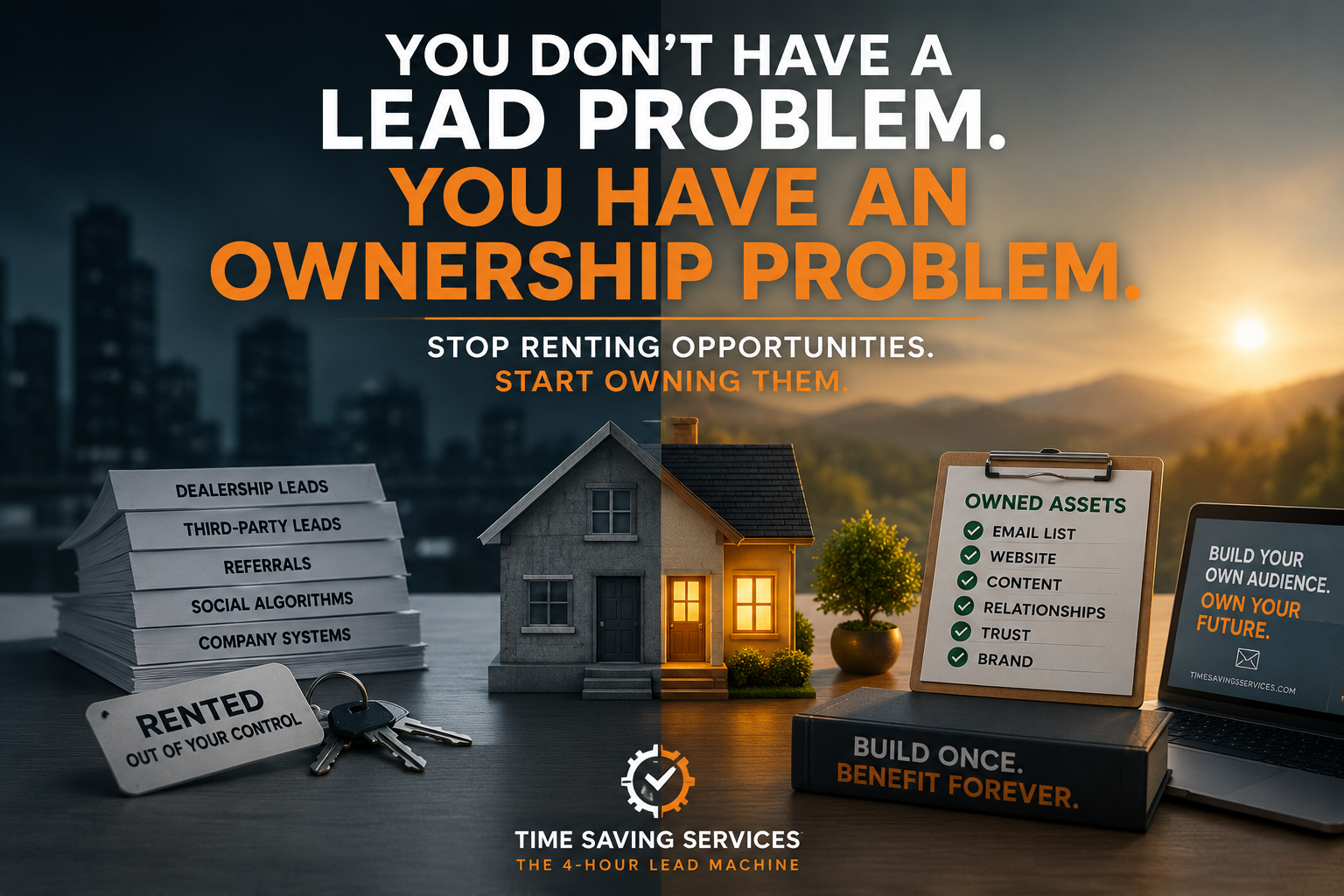
Every commission-based professional has felt the same anxiety at some point in their career. The pipeline looks thin. The phone isn't ringing. The referrals slowed down. The obvious response is to hunt for more leads.
But the professionals who compound their income over decades — the ones who never seem to be starting over — aren't playing the lead game at all. They're playing a different game entirely.
This article is about that game. It's about the quiet, uncomfortable difference between generating opportunities and owning them.
Why Most Commission Professionals Are Solving the Wrong Problem
Ask a commission-based professional what they need more of, and almost every answer sounds the same: leads. More calls. More referrals. More names in the CRM. It feels obvious. If income is a function of opportunities, more opportunities should mean more income.
But look closely at the top performers who last a decade or more, and a different pattern emerges. They aren't the ones with the biggest lead lists. They're the ones with the biggest owned audience. Their pipeline doesn't restart every Monday. It compounds.
Most commission professionals don't have a lead problem. They have an ownership problem. And the two look identical from the outside — right up until the moment the leads dry up.
Why Referrals, Leads, and Followers Are Rented
Purchased leads
You pay per name, and the name isn't loyal to you. It's loyal to whoever contacts it first with the cleanest offer.
Company leads
They come with strings — quotas, scripts, splits, and territories. The moment you leave, they stay.
Referrals
Wonderful when they come. Impossible to schedule. You can nurture the source, but you can't systematize the flow.
Social media followers
You didn't collect them. The platform did. You are renting access to them, and the algorithm decides the rent each morning.
Building Assets vs. Chasing Opportunities
Chasing an opportunity ends the moment the conversation ends. Building an asset changes the shape of every future conversation.
An asset is anything you own that continues producing opportunities after you stop working on it today. A website ranking for the right question. An email list of people who asked to hear from you. An article that answers a decision your buyer is already researching.
The goal isn't more leads. The goal is more leverage.
"The day you stop showing up shouldn't be the day your opportunities stop showing up."
The Ownership Mindset
The ownership mindset asks a different question. Not "where can I get more leads this week?" but "what am I building this week that will still be working for me next year?"
It reframes daily activity. A cold call is spent effort. A published article is stored effort. Both take an hour. Only one keeps producing after the hour ends.
Owners think in decades. Renters think in months. Both can survive. Only one compounds.
Why Trust Compounds Over Time
Trust is the only marketing asset that appreciates without maintenance. Every helpful email a subscriber opens adds a small deposit. Every article that answers their real question adds another. Over months and years, those deposits accumulate into something a paid ad can never buy: the assumption that you're the person to talk to.
The professional the market already trusts doesn't have to win the deal. They only have to show up.
Why Email Lists Are Real Assets
An email list is one of the last true owned channels left. No algorithm sits between you and the inbox. No platform charges you to reach the people who asked to hear from you. If the internet reshuffled tomorrow, your list would still be your list.
Every subscriber is a permission slip — small, quiet, and durable. Every send is a chance to compound trust rather than rent attention.
Why Websites Become Business Assets
A website isn't a brochure. It's the only piece of real estate on the internet you actually own. It works while you sleep, answers questions at 2 a.m., captures subscribers you'll never meet in person, and quietly builds authority in search results long after the page was written.
Rented profiles borrow you an audience. A website builds you one.
Why Educational Content Compounds
Educational content is unusual because it gets more valuable with age. A great article written this month can rank higher, earn more links, and convert more readers two years from now than it does the week it was published.
Every article, every email, every subscriber becomes another asset working while you sleep. That is the definition of leverage — and it is unavailable to the professional whose entire strategy is calling names off a purchased list.
Why Opportunity Ownership Creates Freedom
Ownership doesn't just produce income. It produces optionality. When your opportunities travel with you, you can change carriers, change brokerages, change dealerships, or change careers without starting from zero.
The day you stop showing up shouldn't be the day your opportunities stop showing up.
What This Looks Like Across Industries
Insurance
The agent who runs a weekly educational email to policyholders and prospects owns a book that doesn't churn when the carrier changes appetite.
Real estate
The agent with a local-market website and an email list of past clients and neighborhood watchers isn't dependent on Zillow's next algorithm update.
Automotive sales
The salesperson who publishes short, useful videos about the buying process becomes the trusted expert customers ask for by name — instead of whoever's up next on the floor.
Financial advising
The advisor with a niche newsletter attracts qualified prospects who arrive already convinced, cutting months off the sales cycle.
Loan officers
The loan officer who educates first-time buyers through content owns the relationship long before the pre-approval, and long after the closing.
Renting Opportunities vs. Owning Opportunities
| Renting | Owning |
|---|---|
| Purchased Leads | Email List |
| Social Media Followers | Email Subscribers |
| Company CRM | Personal Audience |
| Cold Calls | Evergreen Content |
| Referrals | Search Traffic |
| Walk-in Traffic | Lead Magnet |
| Dealership Leads | Website |
The 15-Minute Ownership Audit
Score yourself honestly. One check per item.
- I own a website
- I have an email list
- I have a lead magnet
- I consistently create educational content
- I can contact my audience anytime
0–1 checked: You're renting your entire business. A single change to any one channel could end your pipeline.
2–3 checked: You have the beginnings of an asset base. The next 90 days matter more than the last twelve months.
4–5 checked: You own a real audience. Your job now is to protect and deepen it.
Questions Every Commission Professional Should Ask
- What happens if referrals stop?
- What happens if my company changes?
- What happens if LinkedIn disappears tomorrow?
- Would I still have opportunities?
- What do I actually own?
If those answers make you uncomfortable, you don't have a lead problem. You have an ownership problem — and that's good news, because ownership problems are fixable in a way that lead droughts never are.
If every referral disappeared tomorrow…
If every algorithm changed tomorrow…
If your employer stopped giving you leads tomorrow…
What opportunities would still belong to you?
Actionable Next Steps
- Pick one owned channel. A simple website or a plain email newsletter is enough to start.
- Create one useful lead magnet. Trade something valuable for permission to email.
- Publish one educational piece per week. Consistency beats intensity.
- Send one email per week. Show up before your audience needs you.
- Measure ownership, not vanity. Track subscribers and repeat readers, not follower counts.
For a step-by-step walkthrough, download the 4-Hour Lead Machine Blueprint and take the Opportunity Discovery Interview™.
Frequently Asked Questions
What is an ownership problem?
An ownership problem is when your entire pipeline depends on channels, platforms, or people you don't control. You may have plenty of leads today, but you don't own the relationship, the audience, or the mechanism producing them.
Why is an email list better than social media followers?
An email list is a direct, portable line of communication you own. Social platforms rent you access to followers on their terms and can throttle, restrict, or remove that access at any time.
Can I build an audience while working full-time?
Yes. Owned assets are built in small, consistent increments — one article, one email, one subscriber at a time. Most successful audiences were built alongside a demanding day job.
Do I need thousands of followers?
No. A small, engaged owned audience routinely outperforms a large rented one. Depth of trust matters far more than raw follower count.
How long does it take to build owned assets?
The first meaningful results usually appear within 90 days of consistent publishing. Real compounding shows up between months six and twelve, and continues for years.
Is this only for insurance agents?
No. The ownership framework applies to real estate agents, loan officers, financial advisors, automotive sales professionals, and anyone whose income depends on generating opportunities.
Own the Next Decade
The professionals who look back in ten years with a business that still belongs to them will not be the ones who bought the most leads. They'll be the ones who spent the same hours building assets that kept working long after the workday ended.
Stop renting opportunities. Start owning them. The question isn't whether you're generating opportunities. It's whether you own them.
About the author
Daryan Sullivan
Daryan Sullivan helps commission-based professionals build owned audiences using AI, email marketing, content, and systems thinking. His philosophy is simple: stop renting opportunities and start building assets that continue creating opportunities for years.
Related Articles
- Why Followers Are Not an Asset (coming soon)
- The Referral Trap (coming soon)
- The Asset Test (coming soon)
- How to Build a Lead Machine in Four Hours (coming soon)
- Why Trust Compounds Faster Than Tactics (coming soon)
- The Hidden Cost of Borrowed Leads (coming soon)
Start Building Owned Opportunities
Download the free 4-Hour Lead Machine Blueprint, then continue with The 2026 Email Income System.